PipetteXR
Learning practical laboratory skills through tactile interaction. PipetteXR is a teaching platform built around custom micropipette controllers that give students immediate feedback, letting them master lab technique in a non-hazardous environment.
Developed at Imperial College London with Dr Silke Donahue. I am co-inventor and lead technologist, responsible for the controller hardware, the sensing and the XR integration.
In short
A short introduction to the project, made with Imperial's Digital Media Lab.
Watch on YouTube ↗The gap
Traditional laboratory classes need specialised rooms, expose students to hazardous reagents, and generate substantial non-recyclable plastic waste.
Virtual labs solve the safety problem but lose fidelity: students "conduct" experiments with mouse clicks, game pads or finger taps. None of that builds the motor skills real proficiency depends on. The controller is the missing piece.
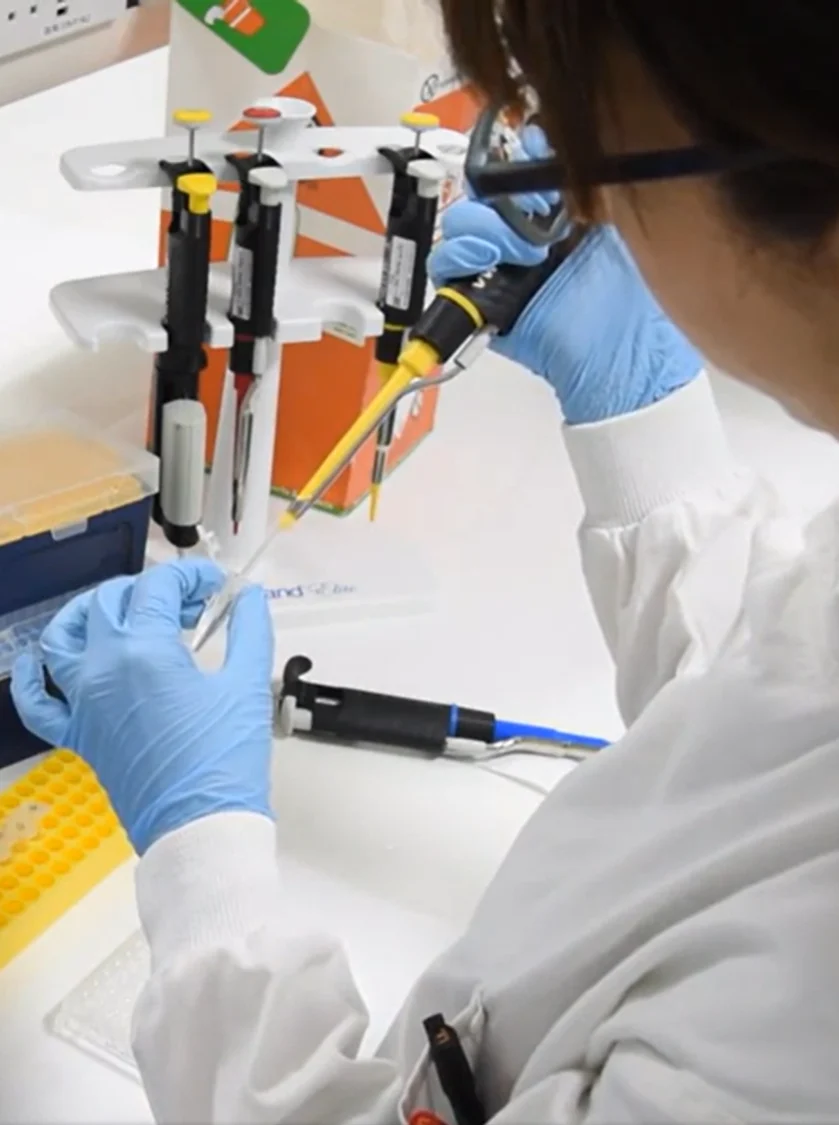
For reference, the technique being taught: Using a Micropipette ↗
The controller
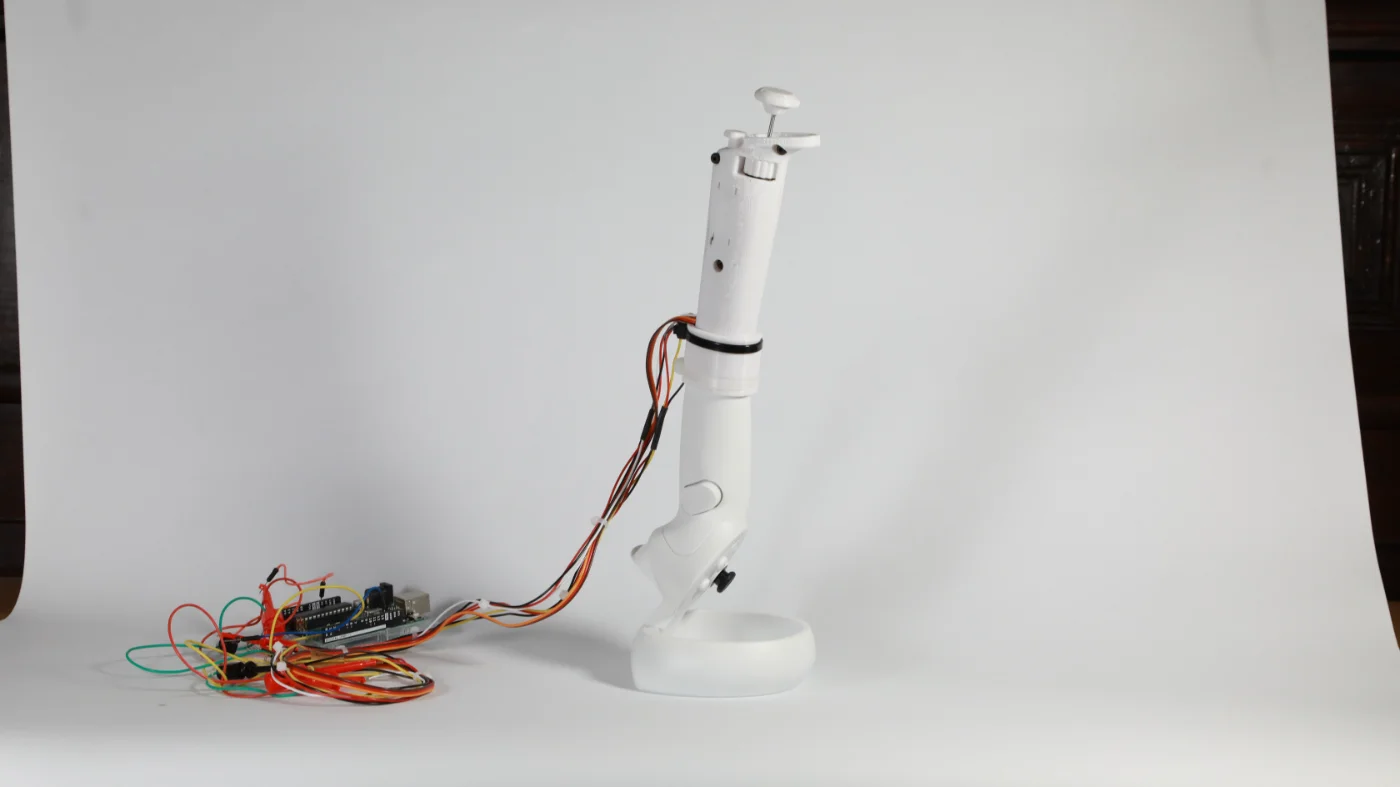
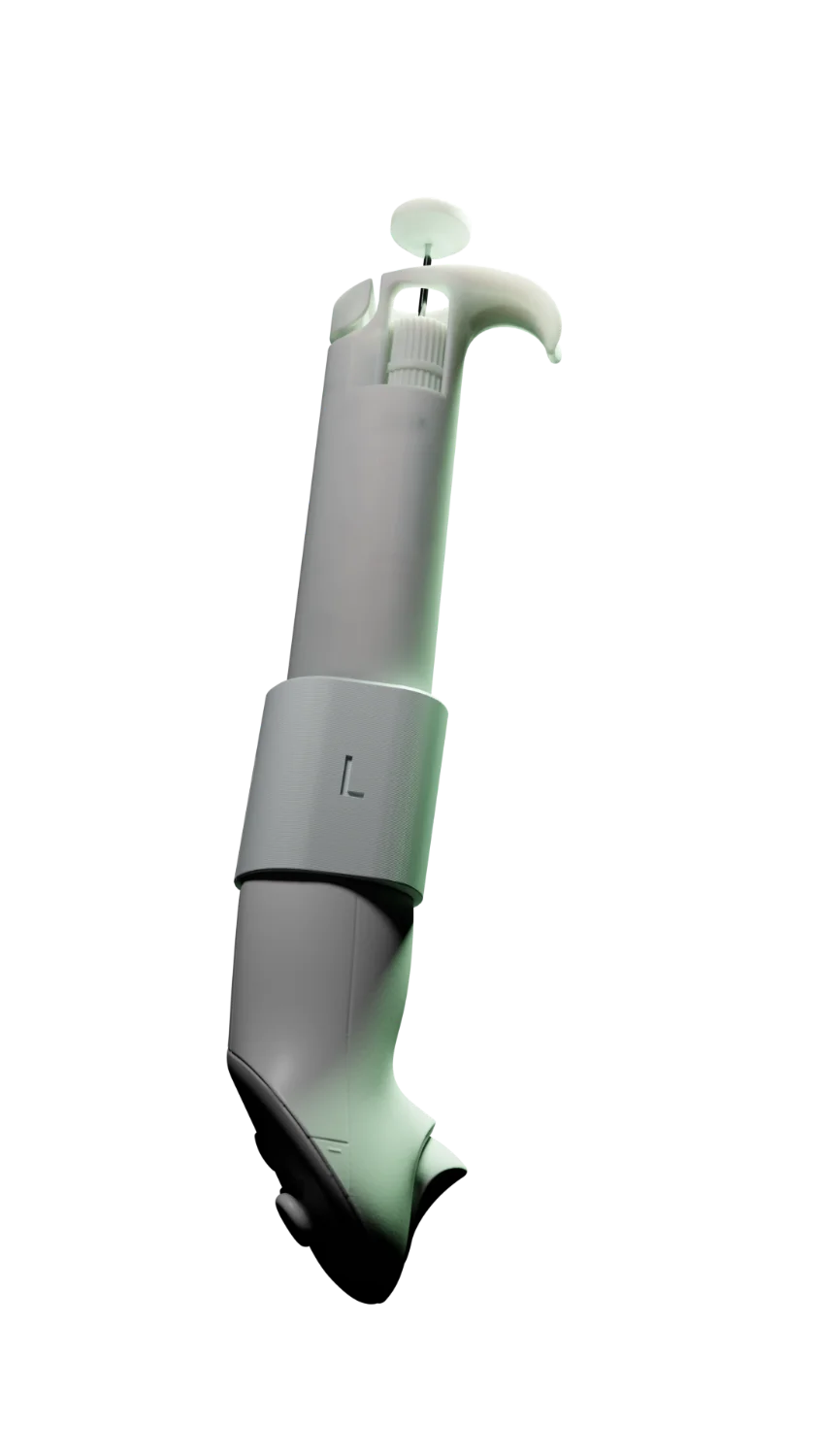
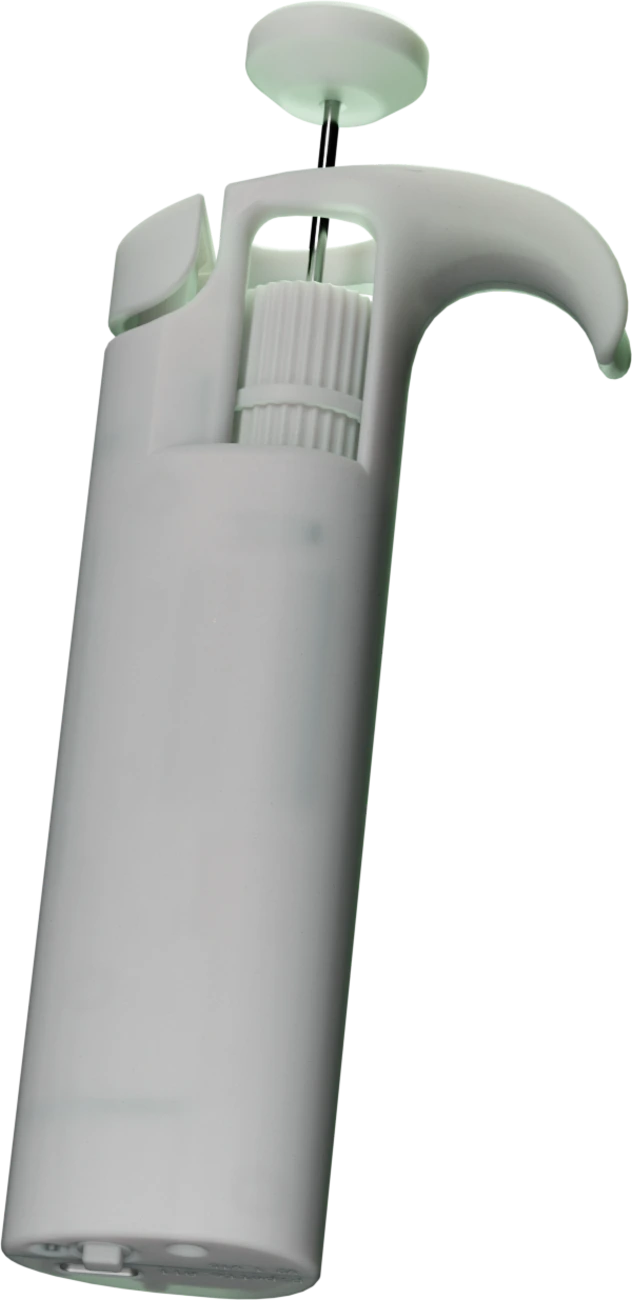
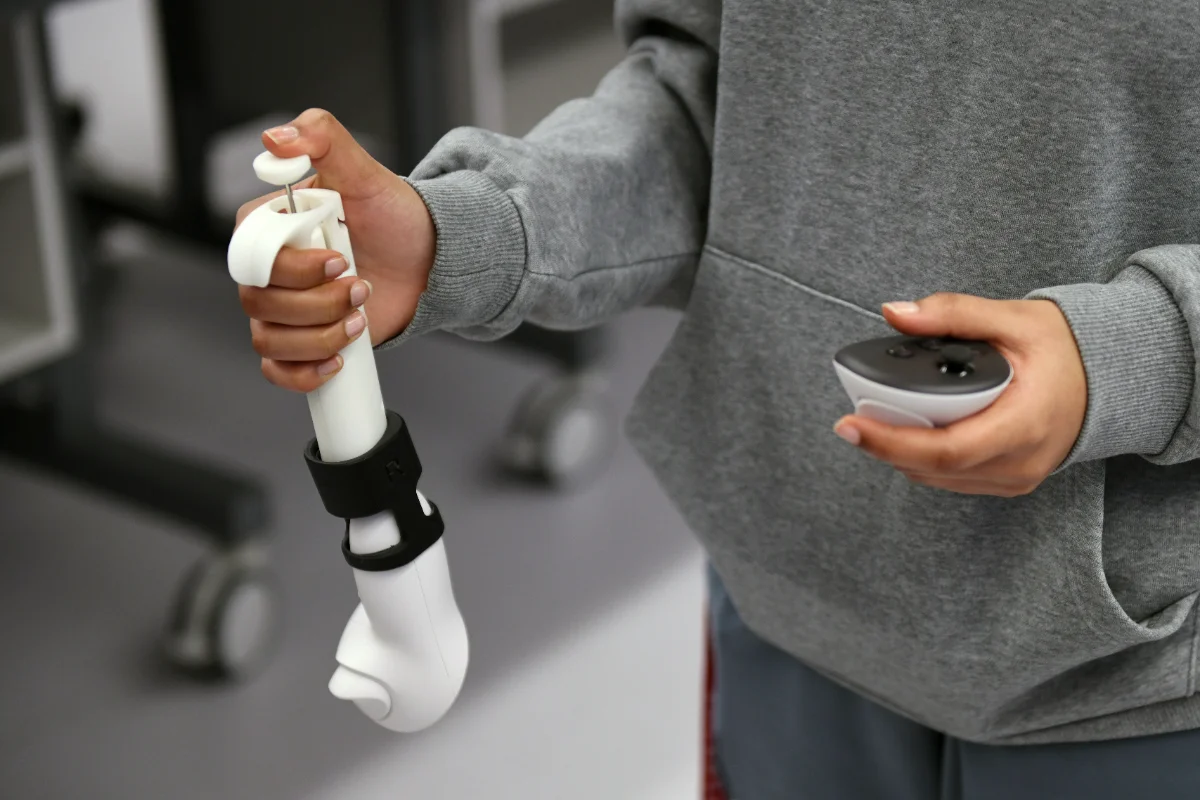
The device carries the weight, proportions and plunger action of a real micropipette, and clamps to a standard VR controller so hand position in the simulation matches the hand in the room. Volume setting and plunger travel are both instrumented, so the software knows exactly what the student did.
Left and right handed variants share the same body; a keyed collar sets the orientation. Each unit costs roughly a tenth of a real micropipette.
One to one
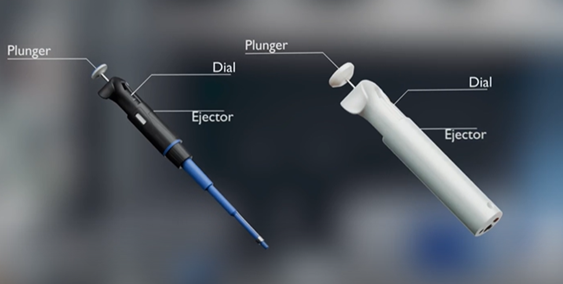
Every control on a real micropipette has a counterpart on the controller in the same place: plunger, volume dial, tip ejector. Students learn the actual instrument, not an interface standing in for one.
In the simulation
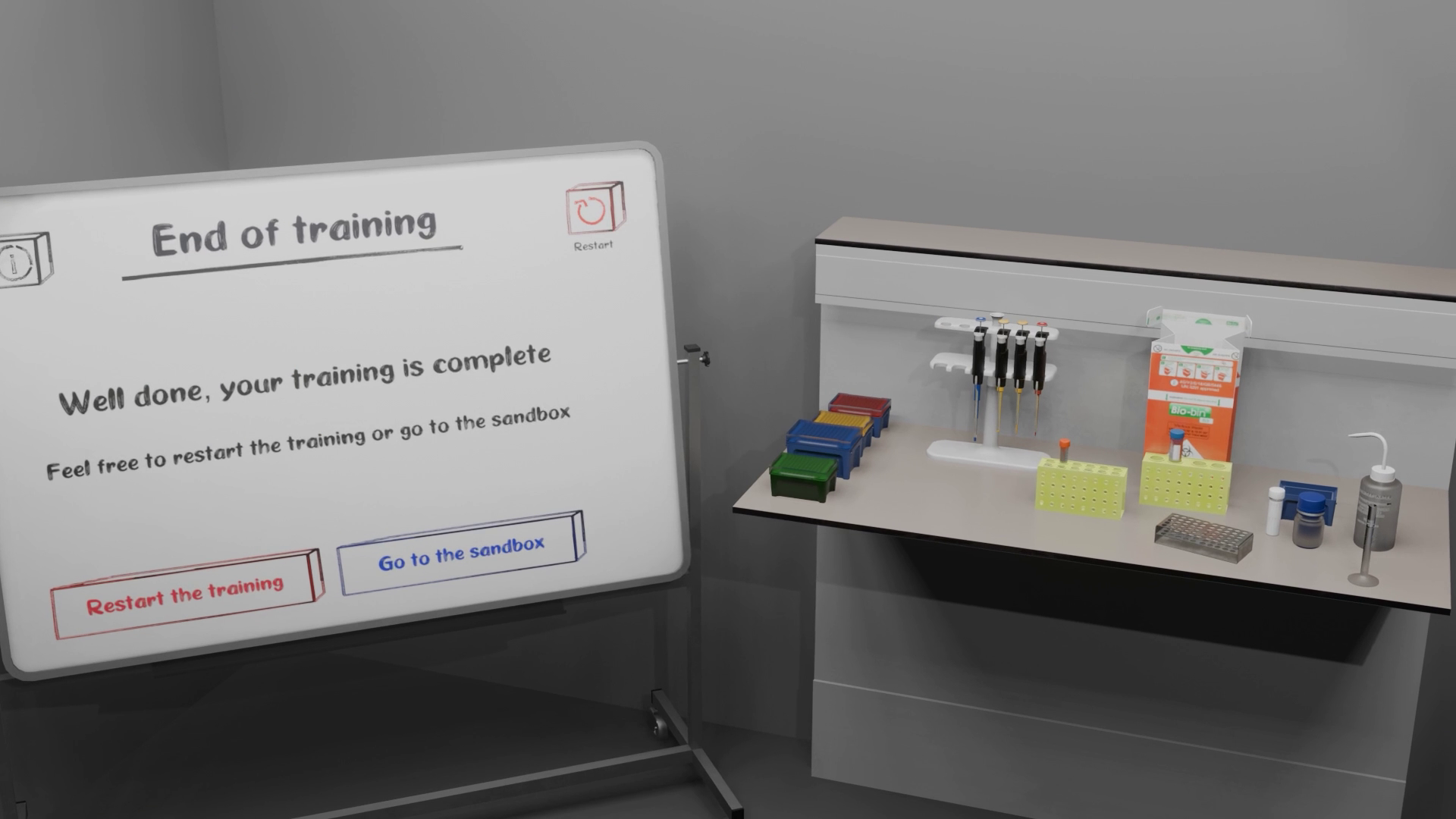
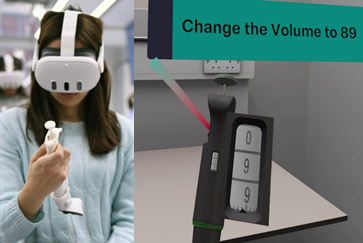
The bench is modelled as a real one: tip box, tubes, tube holder, bio bin. Students work through guided tasks, setting a volume on the dial or pressing the plunger to its second stop, with the prompt tracking position in the sequence.
Errors are caught as they happen rather than at the end. Release the plunger too quickly while drawing up and the run stops, explains that the volume will be incorrect, and sends the student back to discard the tip and start again.
Once guided training is complete, a sandbox opens the bench up for free exploration.
Withheld
The internal mechanism, the sensing arrangement and the coupling geometry are the subject of a pending patent application, so they are not shown here.
Happy to talk through the engineering in person under the appropriate terms.

In teaching
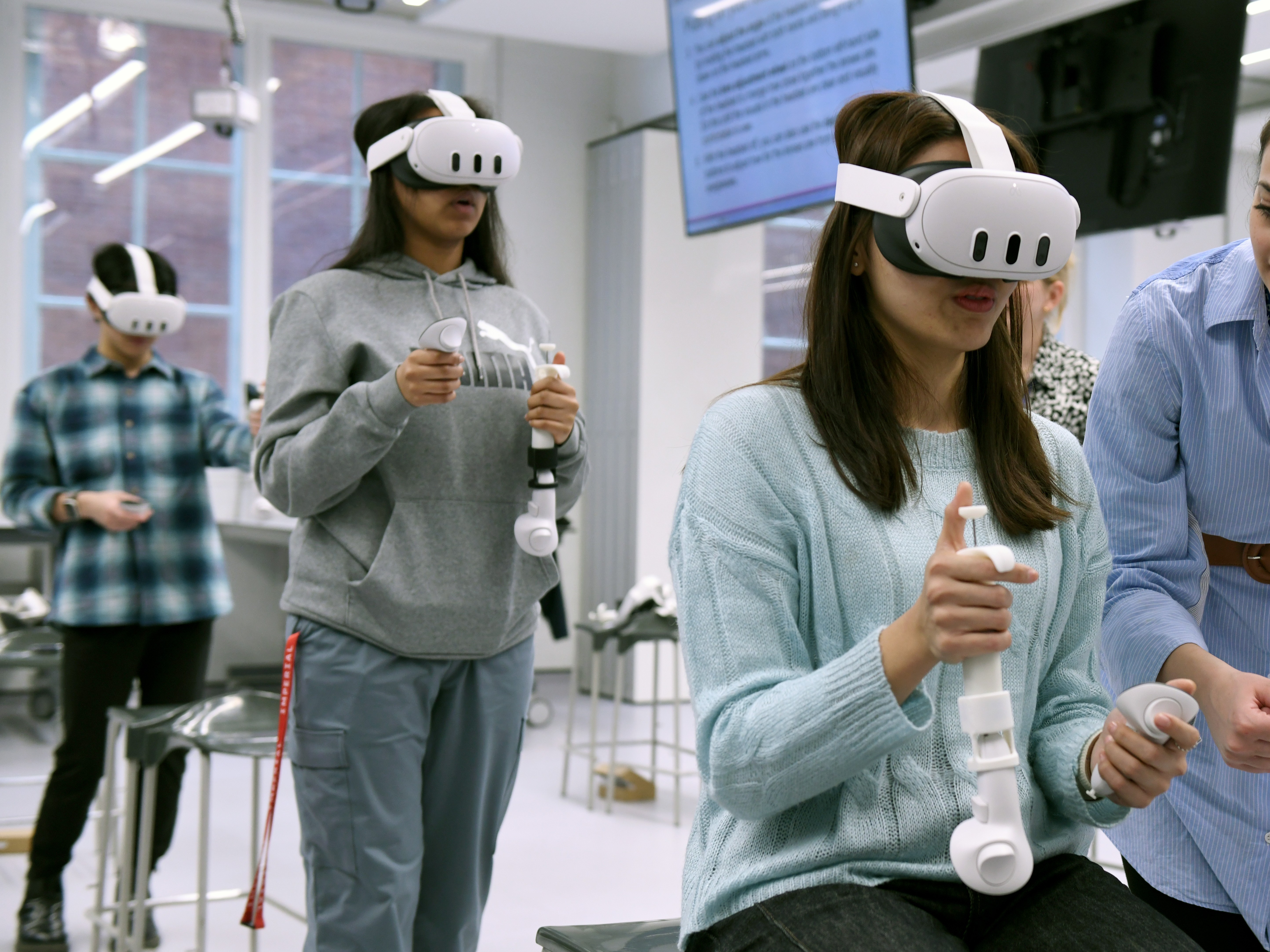
Run with undergraduate biochemistry cohorts at Imperial. Students hold the controller in one hand and navigate with the other, working through guided tutorials while the system records their technique.
Sessions showed improved student confidence and accuracy with real micropipettes afterwards, with no reagents consumed and no tips thrown away.
Where it goes
The simulation is moving from headset-only to a Unity build for PC, iOS and Android, so the platform reaches students without VR hardware. The controller stays the constant: the same motor skills, the same analytics, far fewer barriers to getting one into a student's hand.

Rough beginnings
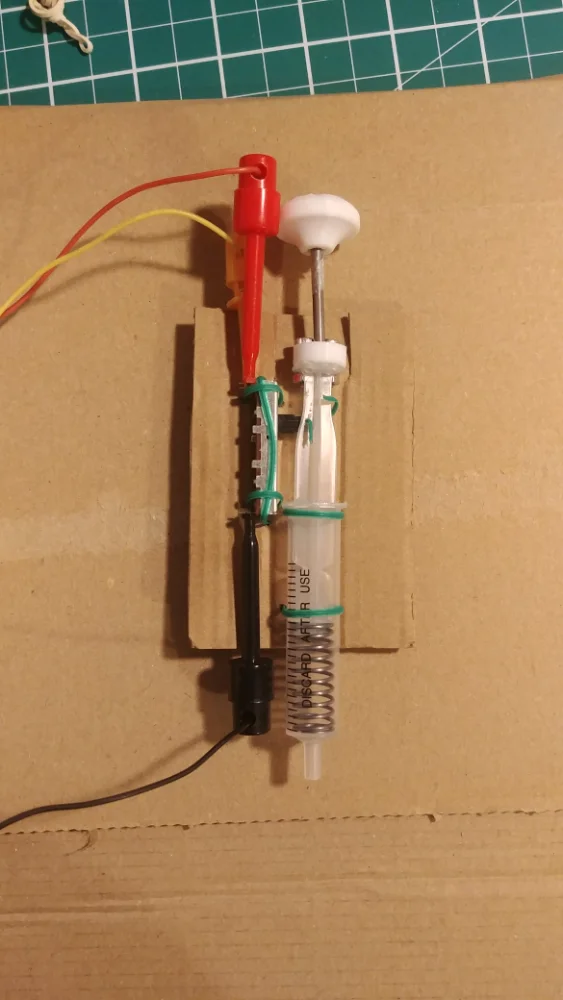
It started as a syringe, a spring and rubber bands, wired to a board on a cardboard sheet. Enough to answer one question: can plunger travel be read accurately enough to tell a good aspiration from a bad one.
From there, printed bodies and custom boards, chasing the version that would survive a room full of students without a cable trailing out of it.